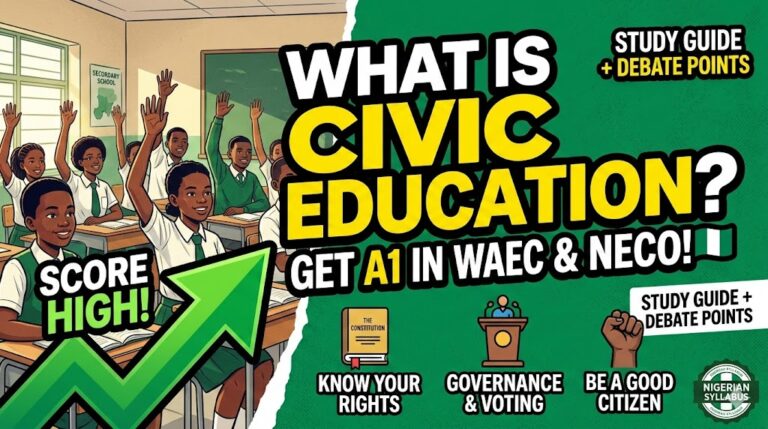
Explaining What is Family Life Education in Nigerian Schools
Are you feeling confused about the new topics showing up in your Social Studies classes? You are definitely not alone.
In my years of teaching secondary school students, I always notice the blank stares when this specific syllabus block hits the chalkboard. Parents panic. They worry the school is crossing boundaries. Students just think it is another boring biology chore. Neither group is entirely right. If you are asking what is family life education, this post resolves that confusion completely. We will break down its core subjects, outline its massive benefits for Nigerian teenagers, and show how it builds healthy adult relationships. Let’s fix that misunderstanding right now.

Before You Begin: The Roots of the Subject
Family life education is a structured curriculum designed to teach adolescents about healthy relationships, personal development, reproductive health, and societal values. It aims to build emotional intelligence and practical life skills. Before studying this, students should keep an open mind and recognize its everyday relevance beyond the classroom.
Forget cramming definitions just to pass an exam. This subject is about your actual daily life. You interact with your friends, siblings, and community members every single day. This curriculum teaches you how to handle those interactions without losing your peace of mind. To truly grasp what is family life education, we have to look at the five main pillars.
1. Understanding Human Development and Puberty
This core component explores the physical, emotional, and psychological changes that occur during adolescence. Students learn about bodily autonomy, hygiene, and the natural progression of human growth. Understanding these transitions reduces anxiety and helps teenagers manage their developing bodies with confidence and dignity.
Puberty hits hard. One minute you are a kid playing in the compound. The next, your body feels entirely foreign. Mood swings take over. Teachers often skip the awkward details. We can’t afford to do that. Knowing the actual science stops the panic dead in its tracks. Check the World Health Organization for excellent baseline facts on adolescent health.
2. Building Healthy Interpersonal Relationships
Relationship education focuses on effective communication, conflict resolution, and mutual respect within families and friendships. It provides actionable frameworks for setting boundaries and recognizing toxic behaviors early. Mastering these social skills is essential for building strong community ties and preventing future domestic issues.
Drama ruins friendships fast. We all know that one person who constantly starts fights over nothing. Learning to talk things out fixes this. Healthy relationships require active work. Try these steps next time you argue with a friend:
-
Listen quietly before speaking.
-
Use “I feel” statements instead of pointing fingers.
-
Respect your friend’s boundaries immediately.
3. Making Sense of Reproductive Health
Reproductive health lessons provide medically accurate information regarding sexual health, pregnancy prevention, and sexually transmitted infections. This section prioritizes factual knowledge over fear-mongering. Empowering students with this data drastically reduces the rates of teenage pregnancy and disease transmission within local communities.
So, what is family life education without the hard biology? Incomplete. Let’s be entirely real here. Teenagers face intense peer pressure every weekend. The whispered myths you hear in the school hostel simply won’t keep you safe. Verified medical facts will.
4. Values, Morals, and Decision Making
Value formation teaches youth how to align their personal choices with positive societal morals and ethics. It involves critical thinking exercises where students evaluate the long-term consequences of their actions. This mental training prevents impulsive behavior and fosters responsible, civic-minded adult citizens.
Choices carry heavy weight. Every day, you pick a path. Will you cheat on that upcoming JAMB mock exam? Will you lie to your parents about where you went after school? Students studying what is family life education often realize how fast small lies snowball. Here is a simple decision matrix we use in my classroom:
| Step | Action to Take |
| 1 | Stop and take a deep breath. |
| 2 | Weigh the actual facts. |
| 3 | Choose the most honest path. |
5. Managing Family Dynamics and Roles
This final pillar analyzes the different types of family structures, responsibilities of family members, and economic realities of running a household. Students learn budgeting, teamwork, and empathy. Grasping these concepts prepares teenagers for the practical realities of managing their own future homes successfully.
Families are complicated machines. Sometimes parents argue loudly. Sometimes money is extremely tight. Understanding why this happens gives you empathy. When people ask what is family life education, they usually forget this part. You stop seeing your parents as perfect superheroes and start seeing them as humans trying their best. The National Policy on Family Life and HIV Education (FLHE) champions this exact holistic approach across Nigeria.
Is Family Life Education Just Sex Ed?
A common misconception is that family life education is exclusively about sex. In reality, sexual health is just one module within a massive curriculum. The broader focus includes emotional intelligence, financial literacy, communication skills, and civic responsibility, ensuring comprehensive personal development for teenagers.
I get asked this constantly by worried parents at PTA meetings. No. It is way bigger than that. It is basic survival training for adulthood. Now you know exactly what is family life education and why it matters so much for your future.
You have the facts. You understand the pillars. Don’t let the big words on the syllabus scare you anymore. Approach your next class with confidence.