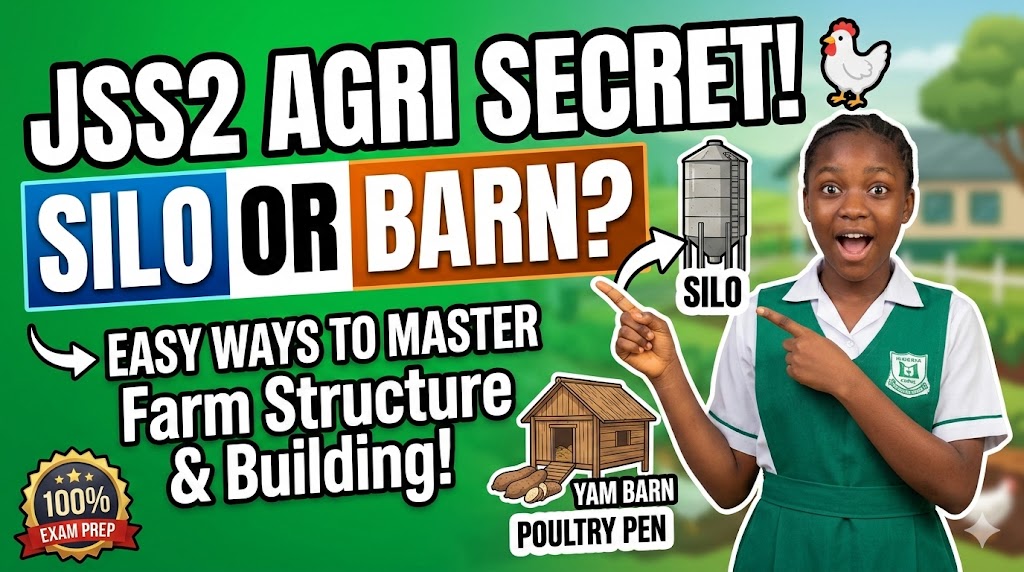
Farm structure and building for JSS2
Agricultural Science can feel overwhelming. I totally get it. Remembering all those different barns, silos, and paddocks is incredibly stressful.
Many of my students struggle to tell a crib from a pen. But passing your next exams doesn’t have to be a nightmare. This guide breaks down exactly what you need to know about farm structure and building for jss2.
You will learn the exact definitions, types, functions, and maintenance practices for these agricultural facilities. By the end, you will confidently breeze through your continuous assessments and junior WAEC.

Before We Start: Understanding the Basics
Farm structures are specific physical constructions built on agricultural land to facilitate crop production, livestock rearing, and equipment storage. They differ from standard farm buildings, which are usually larger, permanent enclosures with roofs and walls used primarily for housing livestock.
I always tell my students at my tutorial center in Ikorodu to visualize these things like rooms in a house. Each one has a specific job. If you memorize the job, you will remember the construction easily. When studying farm structure and building for jss2, you must group them properly.
1. Production Structures (Paddocks and Fish Ponds)
Production structures are open-air or semi-enclosed constructions designed specifically to raise livestock or grow specific crops directly. Examples include fish ponds for aquaculture, paddocks for grazing cattle, and poultry runs. These setups provide a controlled natural environment necessary for optimal agricultural yield.
Notice how these aren’t full houses. They just keep animals safe while they grow. Short and simple. You don’t live in them. You simply manage the growing process inside them.
Here is a quick step-by-step process of how we use them:
-
Fence an open area of grass with wire mesh.
-
Introduce a herd of cattle or sheep.
-
Allow them to graze freely within the safe boundary.
2. Storage Structures (Silos, Cribs, and Barns)
Storage structures are specially designed units built to preserve harvested agricultural produce and prevent spoilage from pests or weather. Common examples include silos for bulk grains, rhumbus for storing unthreshed crops in northern Nigeria, and yam barns built with vertical poles.
In my years of helping JSS3 students prepare for their BECE, I constantly see students confuse a silo with a barn. A silo holds loose grains like dried maize. A barn holds fresh tubers like yam.
Getting this difference right secures easy marks. You can cross-check standard storage requirements through the FAO’s guide on agricultural facilities for factual backing.
3. Temporary and Permanent Farm Buildings
Farm buildings are categorized into temporary and permanent types based on their construction materials and lifespan. Temporary buildings use cheap materials like bamboo and thatch for short-term needs. Permanent buildings use concrete, metal, and corrugated iron sheets, serving as long-lasting facilities.
A major topic in farm structure and building for jss2 is knowing the construction materials. You will definitely see a multiple-choice question on this. Look at the table below for a quick summary. Memorize it tonight.
| Feature | Temporary Buildings | Permanent Buildings |
| Lifespan | Short (1-3 years) | Long (10-50+ years) |
| Materials | Bamboo, thatch, mud | Concrete, steel, bricks |
| Cost | Very low | Very high |
4. How to Maintain Your Farm Facilities
Maintaining agricultural facilities requires routine inspection and immediate repairs to prevent structural collapse and disease outbreaks. Essential practices include painting wooden parts with solignum to deter termites, patching leaking roofs, regularly clearing surrounding bushes to prevent bushfires, and sanitizing animal pens.
Proper maintenance is a highly tested area in farm structure and building for jss2. You cannot build a poultry house and leave it to rot. You must clean it. You must paint it.
Termites are the biggest enemies of wooden structures in Nigeria. Treating your wood with anti-termite chemicals is non-negotiable.
5. Nailing Your Exams on farm structure and building for jss2
To pass your exams easily, prioritize past questions and focus on clearly distinguishing between temporary and permanent structures. Create flashcards for local examples like the rhumbus, practice drawing well-labeled diagrams of yam barns, and memorize specific maintenance techniques for different materials.
Draw the structures. Visual memory works wonders. Grab a blank sheet of paper right now. Sketch a simple silo and label the loading roof and the discharge chute.
Mastering farm structure and building for jss2 is totally doable. You have all the facts right here. Take a deep breath. You are going to do exceptionally well on your next Agricultural Science paper.