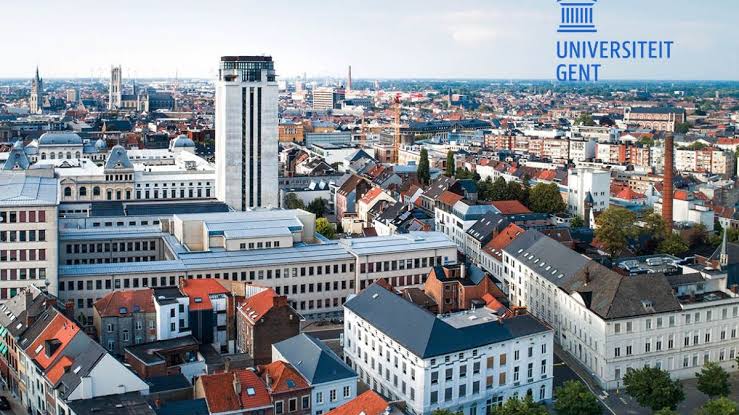
Ghent University Master Mind Scholarship 2026 in Belgium: Eligibility, Deadline and How to Apply
The Ghent University Master Mind Scholarship 2026 in Belgium is one of the most competitive funding options for international students who want to study a master’s degree in Flanders. For the 2026–2027 academic year, the Master Mind call is open, Ghent University is one of the participating institutions, and Ghent’s listed deadline is April 1, 2026. The scholarship is funded by the Flemish Ministry of Education and Training and offers €10,225 per academic year plus a tuition-fee waiver.
What makes this scholarship important is not just the money. It is one of the few well-known Belgium master’s scholarships that combines a substantial grant with a reduced tuition obligation, while also carrying the academic weight of a selective regional government award. The catch is that the process is not as simple as filling one form and waiting. At Ghent University, scholarship consideration is tied to academic admission and internal preselection, so applicants who do not understand the sequence often lose time.

Quick summary of the scholarship
Here are the key facts most applicants need first:
-
Host institution: Ghent University
-
Country: Belgium
-
Scholarship scheme: Master Mind Scholarship
-
Sponsor: Flemish Ministry of Education and Training
-
Study level: Master’s
-
Eligible applicants: International students applying for a master’s programme at a participating Flemish institution
-
Scholarship value: €10,225 per academic year plus a tuition-fee waiver
-
Ghent University deadline: April 1, 2026
-
Duration: 1 year for a 60 ECTS programme, up to 2 years for a 120 ECTS programme
-
Application route: Admission application first, then institutional preselection, then Mobility Online if nominated
What the Ghent University Master Mind Scholarship 2026 in Belgium is
This scholarship is not a Ghent-only funding scheme. It is part of the broader Master Mind Scholarship programme for Flanders and Brussels. The Flemish government awards it to academically strong international students who want to pursue a master’s degree at participating institutions. Ghent University is one of those institutions and has its own internal nomination process before selected files move forward to the wider Flemish-level selection.
That distinction matters. Many applicants assume they are applying straight to a final scholarship committee. In practice, they first need to be academically admissible to Ghent University, then be strong enough to earn internal support. Ghent’s official scholarship page says students cannot apply before being preselected by the master programme coordinator, and that only academically admitted students will be considered.
Why this scholarship stands out for international master’s students
For students comparing funded master’s options in Europe, the Master Mind route stands out because it mixes prestige with practical support. The award amount for 2026–2027 is €10,225, and the host institution may charge only the low scholarship-holder tuition rate, which is listed at €136.50 for 2026–2027. For a two-year master’s programme, the scholarship can continue into the second academic year if progression requirements are met.
Still, applicants should read the benefit correctly. This is strong support, but it is not a promise that every living expense disappears. The payment schedule is split into installments, and in two-year programmes the second-year grant depends on academic progress. That makes financial planning important, especially for students who assume the scholarship behaves like a single lump-sum full ride.
Who can apply for the Ghent University Master Mind Scholarship 2026 in Belgium
The scholarship is for students applying to take up a master’s degree at a participating Flemish higher education institution. Study in Flanders states that all nationalities can apply except Russian nationals, and the programme must meet at least 60 ECTS per academic year. Ghent University’s own page says new international students admitted to start a master’s programme, including advanced master’s programmes, can be eligible through its process.
This means the most suitable applicant is usually someone who:
-
is applying for a new master’s degree rather than already studying one in Flanders
-
has a strong academic record
-
can prove English proficiency
-
is applying to a Ghent programme that falls within the scholarship framework
-
is prepared for both admission review and scholarship competition
Eligibility requirements you need to check carefully
Academic requirement
The published academic benchmark is high. Study in Flanders says applicants should demonstrate strong academic performance or potential, normally shown by a GPA of 3.5 out of 4.0 based on the last completed bachelor’s or master’s degree. This is one of the first filters, so applicants with borderline grades need to strengthen every other part of the file rather than assuming the GPA line is flexible.
English language requirement
For students enrolling at a university, the scholarship guidance accepts proof such as:
-
IELTS overall 7.0
-
TOEFL iBT total 94
-
CEFR C1
-
or a similar officially recognized result accepted by the host institution.
The language proof must generally be no older than three years when processed by the host institution.
Previous degree and enrollment restrictions
There are also restrictions applicants often miss. The degree used to enter the master’s programme must not have been obtained at a Flemish higher education institution. Students already enrolled in a Flemish higher education institution generally cannot apply, except a narrow exception for some international students already in a preparatory programme in Spring 2026 to begin a master’s in September 2026. Preparatory programmes, bridging programmes, and distance learning are not eligible for this scholarship.
What the scholarship covers
The financial side is one of the clearest strengths of this opportunity. For 2026–2027, the Master Mind Scholarship provides €10,225 for the academic year and a tuition-fee waiver structure under which the institution may charge only the lowest scholarship-holder rate. The scholarship lasts one academic year for a 60 ECTS master’s programme and up to two academic years for a 120 ECTS master’s programme.
Study in Flanders also explains the payment schedule, which matters more than many applicants realize. A portion can be paid before the academic year starts or after arrival depending on the arrangement, further installments follow after registration and semester completion, and the final part of the first-year grant depends on successful completion of the academic year. In a two-year master’s programme, continuation into year two depends on earning at least 54 ECTS in the first year.
What it does not automatically solve
This scholarship is generous, but it does not remove the need for careful planning. Students still need admission, visa preparation, housing planning, and enough financial discipline to handle costs before and between installments. The scholarship also cannot be combined with another Flemish Government scholarship, Erasmus+ or Erasmus Mundus funding, a BAEF scholarship, or a Fulbright scholarship.
Another overlooked point is mobility. Students can still join mobility activities such as Erasmus+ during their master’s programme, but at least half of the programme credits must be earned at the Flemish host institution. So this is not the right scholarship for someone hoping to spend most of the degree outside Flanders.
Required documents for the application
If you are preselected and invited into Mobility Online, Study in Flanders says the application file should include the following:
-
profile picture
-
copy of passport or national ID
-
CV
-
transcript of records
-
English language proof or official exemption letter
-
motivation letter in English
-
two signed recommendation letters in English
-
copy of diploma or diplomas
-
certified translations where required
There is one detail worth emphasizing. The CV is not just a formality. The application guidance says it should include your American GPA out of 4.0, along with publications, awards, and previous scholarships where relevant. That tells you what kind of file the selectors expect: not padded, but academically organized and easy to assess quickly.
Deadline and timeline for Ghent University applicants
The main date to remember is April 1, 2026, which Study in Flanders lists as Ghent University’s scholarship deadline. Ghent’s own scholarship page also says the application for academic admission should be submitted before April 1 according to its procedure.
After that, the process moves internally. Ghent says the master programme coordinator can propose up to two applicants, and the International Relations Office then screens files and sends a shortlist of up to twenty students forward. Study in Flanders adds that a participating host institution may submit a maximum of twenty applications overall. If you are preselected, you receive a Mobility Online email and must complete that part on time.
How to apply step by step
1. Choose an eligible master’s programme at Ghent University
Start with programme fit, not the scholarship alone. The scholarship follows the academic application, so the master’s choice has to make sense on its own. The programme must be a qualifying master’s degree route within the participating institution framework.
2. Apply for academic admission before the Ghent deadline
Ghent’s official page says the Master Mind route is incorporated into the normal admission scheme and only academically admitted students are considered. Waiting until the last moment is risky because missing documents or slow references can derail both admission and scholarship consideration.
3. Position yourself for internal preselection
You cannot directly jump into the scholarship tool on your own. Ghent states that a student cannot apply before being preselected by the master programme coordinator. This means your admission file needs to be nomination-worthy, not merely acceptable.
4. Complete the Mobility Online stage if nominated
If preselected, you receive an email with instructions to register in Mobility Online and complete the scholarship file there before the stated deadline. At this stage, missing paperwork becomes a bigger risk than weak ambition, so precision matters.
5. Wait for institutional validation and final selection
The host institution validates and submits the file, and the Flemish Higher Education Council selection committee makes the final award decisions. In other words, preselection is important, but it is not the same thing as winning the scholarship.
Tips to improve your chances of being nominated
The best applications usually do three things well.
First, they make academic strength obvious. If the benchmark is a 3.5/4.0 GPA, your file should not force the reviewer to decode your record. Present your transcript clearly, convert your GPA properly where needed, and use your CV to highlight research, distinctions, publications, or academic awards if you have them.
Second, they show programme fit. A strong motivation letter is not a generic “I want to study in Europe” essay. It should explain why this master’s at Ghent makes sense for your background, what academic or professional direction you are pursuing, and why your profile deserves nomination in a competitive internal pool.
Third, they avoid preventable friction. Weak recommendation letters, unclear translations, mismatched dates, stale English certificates, and sloppy CV formatting do not always destroy an application, but they make it easier to overlook. In a nomination-based scholarship, that matters.
Common mistakes to avoid
One common mistake is assuming the scholarship application comes first. At Ghent, admission comes first and scholarship consideration follows from internal preselection. Miss that sequence, and the rest of your preparation may not matter.
Another mistake is treating the scholarship like a general Belgium award with one universal form. The framework is regional, but each institution has its own deadline and practical flow. For Ghent University, April 1, 2026 is the date you should work around, not a vague “spring” target.
A third mistake is underestimating the competitiveness hidden inside the process. Ghent’s page indicates that programme coordinators can only propose a limited number of candidates, and institutions can only send a limited number of files forward. That means even good applicants need a well-shaped, nomination-ready file.
Important notes before you submit
There are a few details worth keeping in mind right to the end. The scholarship cannot be combined with several other major funding schemes, including Erasmus+ and Erasmus Mundus. If you are applying widely, you should map funding conflicts early rather than after selection.
Also, do not confuse “eligible” with “competitive.” Many applicants may satisfy the formal rules, but the real contest begins at preselection. For that reason, the smartest version of this application is not just complete. It is sharp, evidence-based, and easy for a coordinator to defend.
FAQ Section
Is the Ghent University Master Mind Scholarship 2026 in Belgium open?
Yes. Study in Flanders states that the call for the 2026–2027 academic year is open.
What is the deadline for Ghent University?
Study in Flanders lists April 1, 2026 as Ghent University’s deadline for the Master Mind Scholarship route. Ghent’s own page also points applicants to submit academic admission before April 1.
How much does the scholarship cover?
For the 2026–2027 academic year, the scholarship provides €10,225 per academic year plus a tuition-fee waiver arrangement under which the institution may charge only the reduced scholarship-holder fee.
Can I apply directly for the scholarship?
Not in the simple direct sense. Ghent University says students cannot apply before being preselected by the master programme coordinator, and only academically admitted students are considered.
What GPA do I need?
The published benchmark is a GPA of 3.5 out of 4.0 on the last completed bachelor’s or master’s degree.
What English test scores are accepted?
For university applicants, Study in Flanders lists options such as IELTS 7.0 overall, TOEFL iBT 94, CEFR C1, or a similar recognized result accepted by the host institution.
Can students already studying in Flanders apply?
Usually no. Students already enrolled in a Flemish higher education institution generally cannot apply, except for a limited exception involving some preparatory programme students applying in Spring 2026 to start a master’s in September 2026.
Conclusion
The Ghent University Master Mind Scholarship 2026 in Belgium is a serious opportunity for strong international applicants who want a funded master’s degree in Flanders and are ready to compete for nomination, not just submit a routine application. The key facts are clear: the 2026–2027 call is open, Ghent University participates, the award is €10,225 per academic year plus a tuition-fee waiver, and the Ghent deadline is April 1, 2026.
The best next step is simple: shortlist your Ghent master’s programme, prepare your admission file early, and build a scholarship-ready application that makes your academic record, fit, and motivation easy to support. That approach gives you a much stronger chance than treating the Ghent University Master Mind Scholarship 2026 in Belgium like just another form to fill.
Also Read: 2026 Sahara Group Graduate Trainee Program