7 Steps On How to Study Past Questions Effectively
How to Study Past Questions Effectively
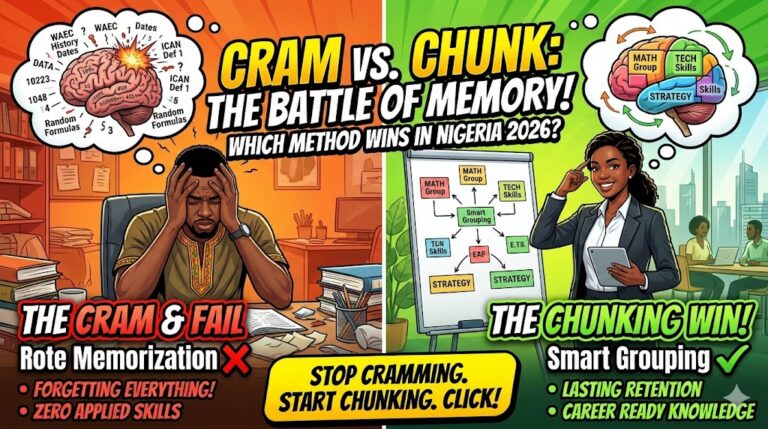
A lot of Nigerian students think buying a booklet of past questions and cramming the answers at the back is a foolproof strategy. Let’s be real. That is a massive setup for failure. You go into the exam hall, see the exact same question structure, but the examiner flipped one tiny word. Panic sets in. You fail. It’s that simple.
The truth is, exam bodies like JAMB, WAEC, and university lecturers do recycle questions. But they are not stupid. They test for comprehension, not your ability to memorize A, B, C, or D. Knowing exactly how to study past questions effectively is the single biggest difference between top-tier students and those who keep retaking the same exams year after year. Let that sink in.
If you are tired of putting in long hours only to get average grades, it is time to change your approach.

Quick Steps on How to Study Past Questions Effectively
-
Study the syllabus before opening any past question.
-
Simulate real exam conditions.
-
Analyze every single option, not just the correct answer.
-
Break down questions by topic.
-
Study the examiner’s marking scheme.
-
Use active recall instead of passive reading.
-
Track your speed and accuracy over time.
The Ultimate Guide on How to Study Past Questions Effectively
1. Study the Syllabus Before Opening Any Past Question
Here’s the thing. Jumping straight into past questions without foundational knowledge is like trying to build a roof before laying the foundation. You will just end up memorizing answers to concepts you fundamentally do not understand.
Before you start, get the WAEC syllabus or your university course outline. Read your notes or textbooks to grasp the core concepts. Past questions are meant to test what you have already learned, not to teach you the subject from scratch. Once you have a basic grasp of the topic, the past questions will show you how those concepts are applied in an exam setting.
2. Simulate Real Exam Conditions
Most students read past questions while lying on their beds, scrolling through social media, and eating snacks. Stop doing this. When exam day comes, the pressure will break you because your brain is not used to the stress.
Treat your study sessions like the real deal. Sit upright at a table. Put your phone in another room. Set a timer. If the actual exam is two hours, give yourself one hour and forty-five minutes. This aggressive exam preparation strategy builds your mental stamina and stops you from freezing up when you see the invigilator.
3. Analyze Every Single Option
This is where 90% of students get it wrong. You see a question, the answer is C, and you move to the next page. Huge mistake.
Examiners love to recycle. The option that is wrong today (Option A) might be the focal point of the question next year. You need to ask yourself: Why is C the correct answer? Why are A, B, and D completely wrong? What context would make Option A correct? When you break down JAMB past questions like this, you aren’t just studying one question; you are studying four different concepts at once.
4. Break Down Questions by Topic
Studying randomly from year to year is highly inefficient. Instead, use a topical approach. If you just finished reading about “Cell Division” in biology, go through ten years of past questions and solve only the questions related to cell division.
This method instantly reveals patterns. You will notice that examiners tend to focus heavily on specific sub-topics while ignoring others entirely. It shows you exactly where to direct your energy.
5. Study the Examiner’s Marking Scheme
For theory and essay exams, knowing the answer is only half the battle. Presenting it the way the examiner wants is what gets you the marks.
You need a solid grasp on understanding marking schemes. Examiners use rubrics. They scan your answers for specific keywords and step-by-step logic. Even if your final calculation is wrong, showing the right formula and steps can earn you partial marks. Look for official marking guides and learn how marks are awarded. If you want to dive deeper into how examiners structure their grading, learning how different question types are evaluated can change your entire approach.
6. Use Active Recall Instead of Passive Reading
Reading the question and immediately looking at the answer at the back of the book is passive. It creates an illusion of competence. You think you know it, but you don’t.
Instead, look at the question. Close the book. Force your brain to retrieve the answer. If you get it wrong, then check the solution. This struggle to remember is what actually builds neural pathways. Implementing how to use active recall is arguably the most powerful way to lock information into your long-term memory.
7. Track Your Speed and Accuracy Over Time
In Nigerian exams, time is your biggest enemy. You might be brilliant, but if you only answer 30 out of 50 questions, you have already failed.
Mastering time management during exams is non-negotiable. Keep a log. On day one, maybe you finished 50 questions in an hour with 60% accuracy. By day fourteen, you should be aiming for 45 minutes with 85% accuracy. Track your progress so you can identify exactly which subjects or question types are slowing you down.
Final Thoughts on Acing Your Exams
-
Never use past questions as a substitute for studying the actual syllabus. They are a testing tool, not your primary textbook.
-
Always figure out why the wrong options are wrong. That is where the real learning happens.
-
Practice under strict, timed conditions to build mental toughness and eliminate exam shock.
-
If you apply these principles, knowing how to study past questions effectively will become your biggest unfair advantage in any exam.
Frequently Asked Questions
Is reading past questions alone enough to pass?
No. Relying purely on past questions without understanding the underlying concepts is a massive risk. Examiners frequently rephrase questions or test a different angle of the same topic. You must understand the syllabus first, then use past questions to test your knowledge and speed.
How many years of past questions should I study?
Aim for the last 10 to 15 years. Syllabuses change, and going too far back might expose you to outdated topics that are no longer tested. Focus on the most recent decade to get the most accurate feel for the current examiner’s style and recurring topics.
What is the best way to remember past questions?
Stop trying to memorize them. Instead, use active recall. Force yourself to answer the question without looking at the options or the answer key. Explain the reasoning behind the correct answer out loud. When you understand the “why,” you won’t need to rely on rote memorization.